Make in India

Since years policy-makers have been debating how to give an impetus to manufacturing in India and make India a Global Manufacturing Hub. But it is Narendra Modi, who within a matter of months, launched the ‘Make in India’ campaign to facilitate investment, foster innovation, enhance skill development, protect intellectual property & build best in class manufacturing infrastructure.
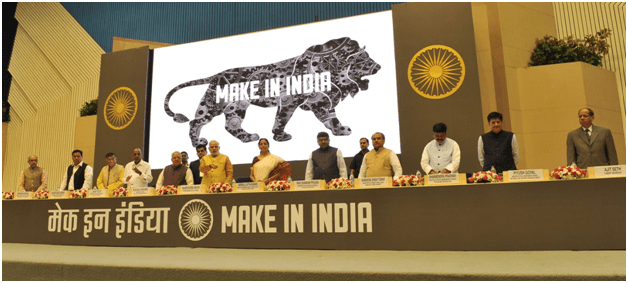
The “Make in India” initiative is based on four pillars, which have been identified to give boost to entrepreneurship in India, not only in manufacturing but also other sectors.

New Processes: ‘Make in India’ recognizes ‘ease of doing business’ as the single most important factor to promote entrepreneurship. A number of initiatives have already been undertaken to ease business environment. The aim is to de-license and de-regulate the industry during the entire life cycle of a business.

gov-track6_1

New Infrastructure: Availability of modern and facilitating infrastructure is a very important requirement for the growth of industry. Government intends to develop industrial corridors and smart cities to provide infrastructure based on state-of-the-art technology with modern high-speed communication and integrated logistic arrangements. Existing infrastructure to be strengthened through upgradation of infrastructure in industrial clusters. Innovation and research activities are supported through fast paced registration system and accordingly infrastructure of Intellectual Property Rights registration set-up has been upgraded. The requirement of skills for industry are to be identified and accordingly development of workforce to be taken up.

gov-track6_2

New Sectors: ‘Make in India’ has identified 25 sectors in manufacturing, infrastructure and service activities and detailed information is being shared through interactive web-portal and professionally developed brochures. FDI has been opened up in Defence Production, Construction and Railway infrastructure in a big way.

New Mindset: Industry is accustomed to see Government as a regulator. ‘Make in India’ intends to change this by bringing a paradigm shift in how Government interacts with industry. The Government will partner industry in economic development of the country. The approach will be that of a facilitator and not regulator.

The Make in India program has been built on layers of collaborative effort. There has been from Union Ministers, Secretaries to the Government of India, state governments, industry leaders, and various knowledge partners. A National Workshop on sector specific industries in December 2014 brought Secretaries to the Government of India and industry leaders together to debate and formulate an action plan for the next three years, aimed at raising the contribution of the manufacturing sector to 25% of the GDP in the coming years.

gov-track6_3

These exercises resulted in a road map for the single largest manufacturing initiative undertaken by a nation in recent history. They also demonstrated the transformational power of public-private partnership, and have become a hallmark of the Make in India program. This collaborative model has also been successfully extended to include India’s global partners, as evidenced by the recent in-depth interactions between India and the United States of America.

In a short space of time, the obsolete and obstructive frameworks of the past have been dismantled and replaced with a transparent and user-friendly system that is helping drive investment, foster innovation, develop skills, protect IP and build best-in-class manufacturing infrastructure. The most striking indicator of progress is the unprecedented opening up of key sectors – including Railways, Defence, Insurance and Medical Devices – to dramatically higher levels of Foreign Direct Investment.
Stand-up India scheme

Stand-Up India Scheme Facilitates bank loans between 10 lakh and 1 Crore to at least one Scheduled Caste (SC) or Scheduled Tribe (ST) borrower and at least one woman borrower per bank branch for setting up a greenfield enterprise. This enterprise may be in manufacturing, services, agri-allied activities or the trading sector. In case of non-individual enterprises at least 51% of the shareholding and controlling stake should be held by either an SC/ST or woman entrepreneur.

  1. SC/ST and/or woman entrepreneurs, above 18 years of age.
  2. Loans under the scheme is available for only green field project. Green field signifies, in this context, the first time venture of the beneficiary in the manufacturing, services, agri-allied activities or the trading sector.
  3. In case of non-individual enterprises, 51% of the shareholding and controlling stake should be held by either SC/ST and/or Women Entrepreneur.
  4. Borrower should not be in default to any bank/financial institution

The rate of interest would be lowest applicable rate of the bank for that category (rating category) not to exceed (base rate (MCLR) + 3%+ tenor premium).

The Scheme envisages 15% margin money which can be provided in convergence with eligible Central / State schemes. While such schemes can be drawn upon for availing admissible subsidies or for meeting margin money requirements, in all cases, the borrower shall be required to bring in minimum of 10% of the project cost as own contribution.

Mission Sagar

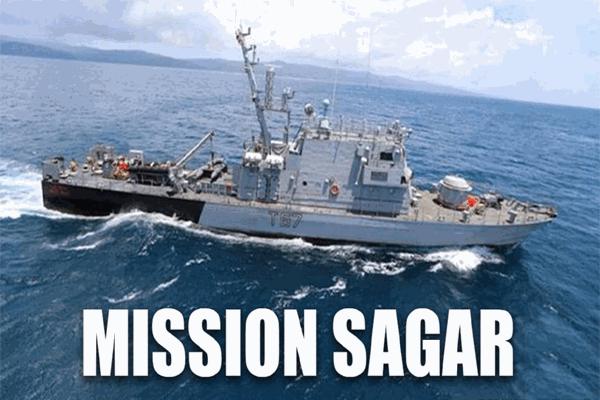
Mission Sagar was a COVID-19relief mission launched by the government of India in May 2020 as a part of its efforts to provide essential aid to the Indian Ocean countries. This was followed up by Mission Sagar II in November and Mission Sagar III in December of that year.

As per the Ministry of External Affairs, Mission Sagar is in tandem with the SAGAR (SECURITY and Growth for All in the Region) initiative.

*Note: Mission Sagar is different from the SAGAR initiative. Mission Sagar is a humanitarian and inter-country outreach program, while the SAGAR initiative is a policy doctrine of maritime cooperation.

Overview of Mission Sagar

As stated earlier Mission Sagar is in alignment with the SAGAR INITIATIVE.The initiative is a vision for economic and security cooperation between India and its maritime neighbours.

Following the COVID-19 pandemic, the government of India took the decision to fulfill the vision of the SAGAR initiative by providing essential humanitarian aid to its maritime partners.

A series of 3 missions were launched in 2020, which were carried out by the ships of the Indian Navy. These ships bought essential items such as medicines to the ports of India’s maritime partners. We will further discuss the details of all the Mission Sagar’s launched by the government of India.

 to fulfill the vision of the SAGAR initiative by providing essential humanitarian aid to its maritime partners.

The First Mission Sagar – I

India sent INS Kesari left port on 10 May 2020 with food items, medicines and medical assistance teams. It would make its way to the Indian Ocean nations of Mauritius, Seychelles, Madagascar, Comoros and La Reunion. These nations are part of the Indian Ocean Commission of which India became an observer

It was the first time that a single relief mission was undertaken to cover all the island nations in the Western Indian Ocean. The only notable exception was Sri Lanka where the Indian Air Force airlifted supplies into the country.

INS Kesari returned to the port of Kochi on June 28, 2020, traveling over 7,500 nautical miles over 55 days.

Mission Sagar – II

In November 2020, INS Airavat left port. It was delivering food to Sudan, South Sudan, Djibouti and Eritrea.

Along with fulfilling a humanitarian mission, India was also strengthening its strategic position as these countries sat on the major shipping lane between the Red Sea and the Suez Canal. Thus they are vital shipping routes and can prove to be a strategic asset in times of conflict.

Mission Sagar – III

In December 2020, INS Kiltan made its way towards Cambodia and Vietnam. The INS Kiltan was carrying 15 tons of Humanitarian Assistance and Disaster Relief (HADR) for disaster relief following catastrophic floods in Vietnam and Cambodia.

Like the previous Sagar missions, this exercise was to show that India is a dependable partner for southeast Asian nations and the first responder in the region.

It also highlighted the importance of the Association of Southeast Asian Nations (ASEAN) in furthering existing strategic ties.

Mission Sagar – IV

In March 2021, INS Jalashwa reached Port Anjouan, Comoros to deliver 1000 metric tonnes of rice to the island nation. This is the second time an Indian naval ship is arriving at Comoros. Earlier, as part of Mission Sagar I, India had delivered medicines and sent medical assistance teams to Comoros.

Political Bias

Political bias is a bias or perceived bias involving the slanting or altering of information to make a political position or political candidate seem more attractive. With a distinct association with media bias, it commonly refers to how a reporter, news organisation, or TV show covers a political candidate or a policy issue.

Bias emerges in a political context when individuals engage in an inability or an unwillingness to understand a politically opposing point of view. Such bias in individuals may have its roots in their trait and thinking styles; it is unclear whether individuals at particular positions along the political spectrum are more biased than any other individuals.

Political Bias exists beyond simple presentation and understanding of view-points favouring a particular political leader or party but rather transcends into the readings and interactions among individuals undertaken on a daily basis.The prevalence of political bias has a lasting impact with proven effects on voter behaviour and consequent political outcomes.

With an understanding of political bias, comes the acknowledgement of its violation of expected political neutrality. A lack of political neutrality is the result of political bias.

Digital Marketing

Digital marketing is the component of marketing  that uses internet and online based digital technologies such as desktop computers, mobile phones and other digital media  and platforms to promote products and services.Its development during the 1990s and 2000s changed the way brands and businesses use technology for marketing. As digital platforms became increasingly incorporated into marketing plans and everyday life,and as people increasingly use digital devices instead of visiting physical shops, digital marketing campaigns have become prevalent, employing combinations of search engine optimization (SEO), search engine marketing(SEM),content marketing, influencer marketing, content automation, campaign marketing,data-driven marketing, e-commerce marketing, social media marketing,social media optimization,display marketing, e-books, and Optical disks and games have become commonplace. Digital marketing extends to non-Internet channels that provide digital media, such as television, mobile phones (SMS and MMS), callback, and on-hold mobile ring tones. The extension to non-Internet channels differentiates digital marketing from online marketing.

Brand awareness, as one of the fundamental dimensions of brand equity, is often considered to be a prerequisite of consumers’ buying decision, as it represents the main factor for including a brand in the consideration set. Brand awareness can also influence consumers’ perceived risk assessment and their confidence in the purchase decision, due to familiarity with the brand and its characteristics.

Unemployment

Unemployment, according to the OECD(Organisation for Economic Co-operation and Development), is people above a specified age (usually 15) not being in paid employment or self employment but currently available for work during the reference period.

Unemployment is measured by the unemployment rate, which is the number of people who are unemployed as a percentage of the labour force (the total number of people employed added to those unemployed).

Unemployment can have many sources, such as the following:

  • new technologies and inventions
  • the status of the economy, which can be influenced by a recession
  • Competition caused by globalization and international trade
  • Policies of the government
  • regulation  and market

Unemployment and the status of the economy can be influenced by a country through, for example, fiscal policy. Furthermore, the monetary authority of a country, such as the Central Bank can influence the availability and cost for money through its monetary policy.

In addition to theories of unemployment, a few categorisations of unemployment are used for more precisely modelling the effects of unemployment within the economic system. Some of the main types of unemployment include structural unemployment, frictional unemployment cylical unemployment, involuntary unemployment and classical. Structural unemployment focuses on foundational problems in the economy and inefficiencies inherent in labor markets, including a mismatch between the supply and demand of laborers with necessary skill sets. Structural arguments emphasize causes and solutions related to disruptive technologies and globalization Discussions of frictional unemployment focus on voluntary decisions to work based on individuals’ valuation of their own work and how that compares to current wage rates added to the time and effort required to find a job. Causes and solutions for frictional unemployment often address job entry threshold and wage rates.

According to the UN’s International Labour Organization(ILO), there were 172 million people worldwide (or 5% of the reported global workforce) without work in 2018.

Because of the difficulty in measuring the unemployment rate by, for example, using surveys (as in the United States) or through registered unemployed citizens (as in some European countries), statistical figures such as the employment to population ratiomight be more suitable for evaluating the status of the workforce and the economy if they were based on people who are registered, for example, as taxpayers.

Mission Karmayogi.

Mission Karmayogi was launched on September 20, 2020 by the Prime Minister Narendra Modi-ledUnion Cabinet. Mission Karmayogi – National Programme for Civil Services Capacity Building (NPCSCB) – is meant to reform Indian bureaucracy and prepare civil servants for the future. The programme aims “comprehensive reform of the capacity building apparatus at individual, institutional and process levels for efficient public service delivery”.

Union Minister Prakash Javadekar, during a press conference, said the mission aims to prepare civil service officers for the future by making them more “creative, constructive, imaginative, innovative, proactive, professional, progressive, energetic, enabling, transparent and technology-enabled.’

What is the need for Mission Karmayogi?

It is often said that Indian bureaucrats are a major reason why India is not progressing at the speed it could have. It is also said that the recruitment and post-recruitment ecosystem of civil servants is outdated and for a like India, it needs a major upgrade. To address these concerns, the government brought these programme. 

How will it help?

The programme will try to improve human resource management practices among the officers. It will focus more on role based management. It will aim to allocate roles and jobs bases on competencies of the officers. The mission has also created an online platform called as iGOT-Karmayogi. iGOT stands for Integrated Government Online Training. This platform will provide content to learn from global best practices rooted in “Indian ethos”. Civil servants will also have to undertake courses on this platform on which the officers’ performance will be evaluated. A Special Purpose Vehicle will monitor the platform. The SPV will be a not-for-profit organisation under Section 8 of the Companies Act. 

Who will manage Mission Karmayogi?

A Public Human Resource Council under the chairmanship of Prime Minister will manage the mission. The other members of this council are: 1. Union Ministers2. Chief Ministers3. Eminent public HR practitioners4. Thinkers5. Public service functionaries6. Global thought leaders 

Budget for the mission

The mission will cover around 4.6 million central employees. A sum of Rs 510.86 crore has been allocated to be spent over a period of 5 years from 2020-21 to 2024-25. It will be partly funded by multilateral assistance up to $50 million.

Pradhan Mantri Jan Dhan Yojana.

Pradhan Mantri Jan Dhan Yojana ( Prime Minister’s People’s Wealth Scheme) is a financial inclusion program of the government of India open to Indian citizens (minors of age 10 and older can also open an account with a guardian to manage it), that aims to expand affordable access to financial services such as bank accounts, remittances, credit, insurance and pensions. This financial inclusion campaign was launched by the Prime Minister of India on 28 August 2014.He had announced this scheme on his first Independence Day speech on 15 August 2014.

Run by Department of financial services, Ministry of Finance, under this scheme 15 million bank accounts were opened on inauguration day.The Guinness Book of World Records recognized this achievement, stating: “The most bank accounts opened in one week as a part of the financial inclusion campaign is 18,096,130 and was achieved by the Government of India from August 23 to 29, 2014”. By 27 June 2018, over 318 million bank accounts were opened and over ₹792 billion (US$12 billion) were deposited under the scheme.

Jan dhan Yojana announced by Prime Minister Narendra Modi on 15 August 2014 and the scheme was launched on 28 August 2014. The objective of starting the scheme is about 59% of rural women in the name of women, more than 50% of the accounts of facilities assured in the country.

Due to the preparations done in the run-up, as mentioned above, on the inauguration day, 15 million bank accounts were opened.The Prime Minister said on this occasion- “Let us celebrate today as the day of financial freedom.” By September 2014, 30.2 million accounts were opened with State Bank of India 2.99 million accounts, Canara Bank1.621 million accounts, Central Bank Of India 1.598 million accounts and Bank of Baroda with 1.422 million accounts. On 20 January 2015, the scheme entered into Guinness book of world records setting new record for ‘The most bank accounts opened in one week’.

The balance in Jan Dhan accounts rose by more than ₹270 billion (US$3.6 billion) between 9 November 2016 and 23 November 2016. 1.9 million householders have availed the overdraft facility of ₹2.56 billion (US$34 million) by May 2016.Uttar Pradesh and West Bengal have got 29% of the total deposits under the scheme,whereas Kerala and Goa became the first states in the country to provide one basic bank account to every household.

The total number of account holders stood at 294.8 million, including 176.1 million account holders from rural and semi-urban branches. A total of 227 million RuPay cards have been issued by National Payments Corporation of India (NPCI) till August 2017. The amount of deposits rose to ₹656.97 billion (US$8.7 billion) by August 2017.

According to various studies, “Beyond enabling account ownership and the use of financial services, the PMJDY also facilitated financial inclusion for a variety of demographics. While the programme has made significant headway towards genuine financial inclusion, it is clear that improving policy communication, widening and deepening progress in low-income states, and ironing out the kinks in the bank-agent model will be crucial if these hard-fought gains are to prove sustainable.”At least 300 million new families have got Jan Dhan accounts in which almost ₹650 billion (US$8.6 billion) have been deposited, Prime Minister Narendra Modi said on 28 August 2017, on the eve of third anniversary of the scheme aimed at financial inclusion.

As on January 27, 2021, a total number of 41.75 crore accounts have been opened under Pradhan Mantri Jan Dhan Yojana (PMJDY) out of which 35.96 crore accounts are operative.

Sweat And Life

Fitness involves activity of some sort that stimulates various systems of the body and maintains a certain condition within the body. Health, on the other hand, involves every system of the body and is only achieved through a lifestyle that supports health.

Physical activity or exercise can improve your health and reduce the risk of developing several diseases like type 2 diabetes, cancer and cardiovascular disease. Physical activity and exercise can have immediate and long-term health benefits. Most importantly, regular activity can improve your quality of life.

Research has shown that it’s important to get all four types of exercise: endurance, strength, balance, and flexibility

Pollution.

Pollution is the introduction of harmful materials into the environment. These harmful materials are called pollutants. Pollutants can be natural, such as volcanic ash. They can also be created by human activity, such as trash or runoff produced by factories. Pollutants damage the quality of air, water, and land.

Air Pollution, water pollution, and land pollution are three major forms of environmental pollution. Pollution can also refer to excessive human activity, such as light and noise pollution, or to specific pollutants such as plastic or radioactive material.

Pollution can be reduced through processes such as recycling and the proper treatment of water and toxic waste. The reduction of corporate fossil fuel extraction is another way to counter air pollution. According to the Carbon Majors report prepared by the Carbon Disclosure Project, more than 70 percent of greenhouse gas emissions comes from only 100 companies.